
Property and profit: Do football clubs own their stadiums?
Do football clubs own their stadiums remains a complex topic that reveals much about the financial health and long-term strategy of professional sports organizations. While some global giants hold the full title to their grounds, many others operate under long-term leases from local councils or private investment firms. This article by soccerwayuk breaks down the diverse ownership models to show you exactly who holds the keys to these legendary pitches.
The big question: Do football clubs own their stadiums?
The ownership structure of football stadiums varies significantly across Europe. In England, traditional giants like Manchester United own Old Trafford outright, providing them with full control over match-day revenue and redevelopment. However, across the English Channel and beyond, the model shifts.
Let’s join soccerwayuk.com to explore the most legendary stadiums in world football and discover the stories behind these hallowed grounds.
1. Camp Nou (Barcelona, Spain)
The Camp Nou stands as the largest stadium in Europe, boasting a staggering capacity of nearly 100,000 seats. Built in 1957, it is not merely a sports venue but a symbol of Catalan identity and the "Més que un club" (More than a club) philosophy of FC Barcelona.
With its modern open-air architecture, it has hosted legendary concerts by icons like Michael Jackson and U2. As of 2026, the stadium is undergoing a massive transformation to become the most technologically advanced arena in Europe. Visitors can embark on the "Barça Immersive Tour," exploring the museum, the players' dressing rooms, and walking through the tunnel to feel the grass beneath their feet. Tickets for this legendary experience start from approximately 28 EUR.
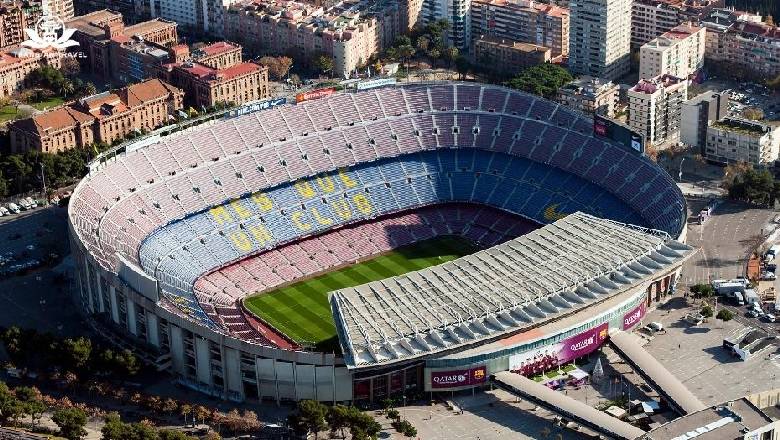
Camp Nou is the largest stadium in Europe and an icon of the Barcelona football club
2. Wembley Stadium (London, England)
Often described as the "Home of Football," Wembley is the beating heart of the English game. Hosting UEFA Champions League finals, FA Cup showdowns, and massive concerts, its 90,000-seat capacity makes it a titan of European venues.
The current structure, completed in 2007 on the site of the original 1923 stadium, is defined by the iconic 134-meter-high Wembley Arch. This arch is not just aesthetic; it supports the weight of the entire north roof. A stadium tour offers access to the England dressing rooms, the Royal Box, and a chance to see the historic FA Cup trophy in the museum.
3. Allianz Arena (Munich, Germany)
Home to the powerhouse Bayern Munich, the Allianz Arena is a marvel of 21st-century engineering. It is famous for its exterior facade made of 2,700 ETFE plastic panels that can glow in different colors—red for Bayern, white for the German national team.
With a capacity of 75,000, it was the first stadium in the world with a full color-changing exterior. The "FC Bayern Museum" located inside is Germany’s largest club museum, offering an interactive journey through the club's trophy-laden history. Fans can also explore the inner sanctum of the dressing rooms and the press conference areas.
4. Santiago Bernabéu (Madrid, Spain)
The Santiago Bernabéu is the fortress of Real Madrid, the most successful club in European history. With a capacity of 81,000, it has been the stage for countless "Remontadas" and historic Champions League nights.
The stadium has recently undergone a futuristic renovation, adding a retractable roof and a 360-degree video scoreboard. It is evolving into a year-round entertainment hub with integrated shopping centers and luxury hotels. The "Bernabéu Tour" is one of Madrid's most popular tourist attractions, showcasing the club's unprecedented collection of European Cups and the prestigious Presidential Box.
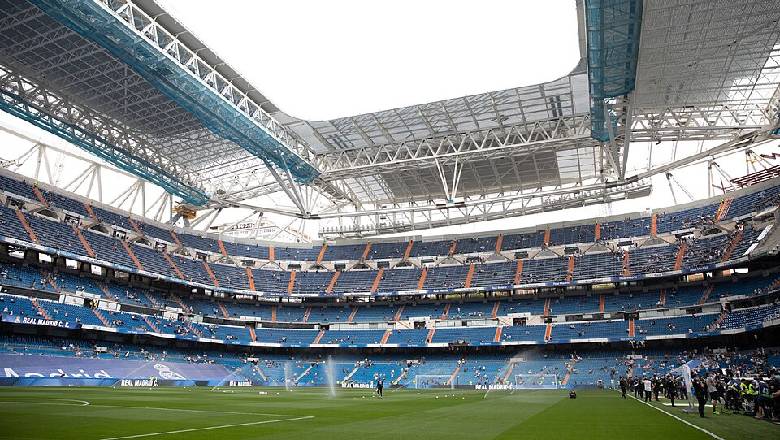
Santiago Bernabéu, with a capacity of 81,000 seats, is the home of Real Madrid
5. San Siro (Milan, Italy)
Formally known as the Stadio Giuseppe Meazza, the San Siro is a rare relic of football history shared by two arch-rivals: AC Milan and Inter Milan. Since its construction in 1926, its brutalist towers and massive spiraling ramps have made it one of the most recognizable silhouettes in sports.
With a capacity of over 75,000, it remains an intimidating cauldron for visiting teams. While the two clubs are currently debating future ownership and new stadium projects, the San Siro remains a must-visit. The onsite museum is the only one in Italy located inside a stadium, featuring jerseys and memorabilia from the legends of both the Nerazzurri and the Rossoneri.
6. Old Trafford (Manchester, England)
Rightly nicknamed "The Theatre of Dreams," Old Trafford has been the home of Manchester United since 1910. With a capacity of 74,000, it is the largest club football stadium in the United Kingdom.
Steeped in history, from the Busby Babes to the Class of '92, every corner of the ground tells a story. Fans visiting Old Trafford can walk through the Munich Tunnel, visit the sprawling club museum, and stand pitchside where legends like Sir Bobby Charlton and Cristiano Ronaldo made history. It remains a prime example of a stadium owned entirely by the club, allowing for a deeply branded and immersive fan experience.
Top 6 soccer clubs that own their own stadiums:
Camp Nou (Barcelona, Spain)
Wembley Stadium (London, England)
Allianz Arena (Munich, Germany)
Santiago Bernabéu (Madrid, Spain)
San Siro (Milan, Italy)
Old Trafford (Manchester, England)
Do football clubs own their stadiums? Understanding this dynamic provides a clearer picture of a team's stability and revenue potential. Be sure to use these insights when analyzing match setups in the odds section of our website. Good luck with your predictions, and may your sports knowledge lead you to a winning streak!
The Most Popular
-
 Is the Euro Cup every 4 years like the World Cup?
 -
 Legends of the game: The most famous British football players of all time
 -
 Iconic jerseys: Exploring the England national football team kit history
 -
 The Blues' kryptonite: Who scored the most goals against Chelsea?
 -
 Ranking the legends in Champions League all time XI
 -
 Rising star: What position did Mbappe play at Monaco?
 -
 Official update on who is Portugal football manager
 -
 Goal machines: The best Belgian strikers of all time
 -
 All-time ranking: The search for the best France football player
 -
 League champions: How many times did Chelsea win the Premier League?