
British FA and UEFA push back against radical 'daylight' offside rule proposed by Arsene Wenger
The “daylight” offside rule was proposed by Arsène Wenger, who currently serves as FIFA’s Chief of Global Football Development. Under this rule, a forward would only be deemed offside if there is clear space between them and the defender. If any part of their body is level with the defender, they would be considered onside.

According to Martyn Ziegler of The Times, the proposals are regarded as “too drastic” and could bring major changes to the way matches are played. Sources say the four British associations on IFAB consider the change too radical, arguing that it would force defenders to hold deeper positions and significantly impact elite-level football.
UEFA has maintained its stance, instead proposing a compromise in which only a player’s torso is used to determine offside, with feet, legs, and the head ignored.
"It was in 1990 after the World Cup in Italy when there were no goals scored. We decided that there is no offside any more when you are on the same line of the defender.” explained by the legend boss of Arsenal
He also blamed VAR for eliminating the advantage traditionally given to strikers, a result that has frustrated many people: “In case of doubt, the doubt benefits the striker. That means when there's a fraction, the striker did get the advantage. With VAR this advantage disappeared and for many people it's frustrating.”
“That's why I proposed that as long as any part of your body is on the same line as the defender, you're not offside. We are experimenting with it now. In one year, the decision will be made, by the IFAB, not by me."
FIFA president Gianni Infantino previously hinted that Wenger’s plan could receive the green light. He supported ideas that would make the game “more offensive and attractive,” but given the recent developments, the proposal now appears to be facing significant challenges.
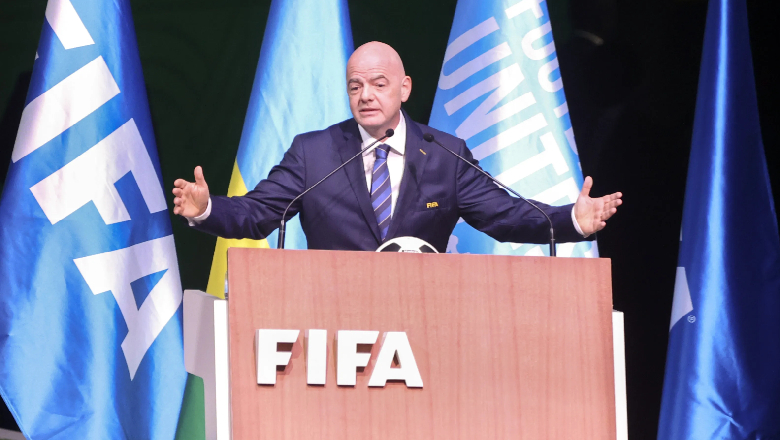
The final decision rests with IFAB, where six of the eight votes are required to approve any change. FIFA holds four votes, with the British associations holding one each. High-level trials would be required before any approval, and no changes are expected before the World Cup.
The Most Popular
-
 Is the Euro Cup every 4 years like the World Cup?
 -
 Legends of the game: The most famous British football players of all time
 -
 Iconic jerseys: Exploring the England national football team kit history
 -
 The Blues' kryptonite: Who scored the most goals against Chelsea?
 -
 Ranking the legends in Champions League all time XI
 -
 Rising star: What position did Mbappe play at Monaco?
 -
 Official update on who is Portugal football manager
 -
 Goal machines: The best Belgian strikers of all time
 -
 All-time ranking: The search for the best France football player
 -
 League champions: How many times did Chelsea win the Premier League?